
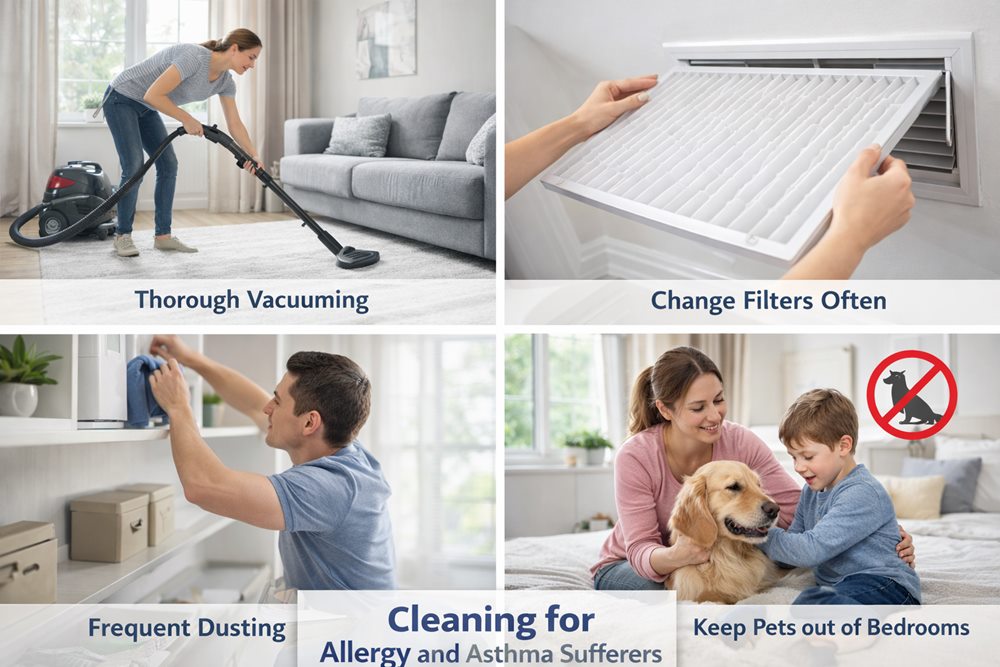
Cleaning for Allergy and Asthma Sufferers: A Practical Guide to a Healthier Home
For families living with allergies or asthma, household cleaning is not just about appearance. It is an important part of creating a healthier indoor environment and reducing exposure to common triggers. When allergy symptoms or asthma flare-ups suddenly return, the cause is often hidden inside the home.
Many parents notice that a child who has been symptom-free for months or even years can suddenly begin coughing, wheezing, or struggling with allergy symptoms again. In many cases, the trigger may be increased exposure to pet dander, dust mites, mold, poor ventilation, or irritants in the air.
This is why Cleaning for Allergy and Asthma Sufferers should be approached with care, consistency, and attention to detail. A well-cleaned home can help reduce airborne allergens and improve comfort for everyone in the household.
Why Cleaning Matters for Allergy and Asthma Sufferers
Indoor allergens can build up gradually without being obvious. Even in homes that look clean, dust, dander, mold spores, and chemical irritants may collect in carpets, bedding, upholstery, vents, curtains, and other overlooked areas.
For people with allergies or asthma, these hidden triggers may worsen symptoms such as:
- Sneezing
- Runny or blocked nose
- Itchy eyes
- Coughing
- Wheezing
- Shortness of breath
- Chest tightness
Regular and thorough cleaning can lower allergen levels in the home and support better respiratory health.
Key Areas to Focus On When Cleaning for Allergy and Asthma Sufferers
When symptoms worsen, surface cleaning alone is usually not enough. A more thorough cleaning routine is often needed.
1. Vacuum Beyond the Floors
Vacuuming is one of the most effective ways to remove dust, pet hair, and allergens. However, many allergens settle in places beyond carpets and rugs. For effective Cleaning for Allergy and Asthma Sufferers, vacuum these areas regularly:
- Carpets and rugs
- Mattresses and pillows
- Upholstered furniture
- Behind and under furniture
- Baseboards and corners
- Window screens and vents
- Curtains and fabric surfaces when appropriate
If possible, use a vacuum with a HEPA filter to help trap fine particles instead of releasing them back into the air.
2. Dust Hidden Surfaces Carefully
Dust often accumulates in places that are easy to ignore, including ceiling fans, blinds, cabinet tops, furniture backs, and electronics. These areas can quietly contribute to poor indoor air quality.
Use a damp cloth or microfiber cloth when dusting to capture particles more effectively rather than simply moving them around.
3. Clean Bedding and Soft Furnishings
Dust mites are one of the most common indoor allergy triggers. They thrive in mattresses, pillows, blankets, and upholstered items. Wash bed linens regularly and keep sleeping areas as clean as possible.
It is also wise to replace or wash hand towels frequently, especially during times when viral infections may also be circulating. Respiratory infections can make asthma symptoms worse.
4. Change Air Filters Regularly
Air filters in air conditioning systems, purifiers, or furnaces can collect large amounts of dust and particles over time. Replacing filters on schedule helps maintain airflow and reduces indoor irritants.
If your home uses ventilation systems, make sure vents and surrounding areas are kept clean as part of your routine for Cleaning for Allergy and Asthma Sufferers.
5. Keep Carpets and Fabric Surfaces Fresh
Carpets can trap allergens deeply within their fibers. In homes with allergy or asthma sufferers, periodic deep carpet cleaning may be beneficial, especially after exposure to pets, seasonal allergens, or prolonged dust buildup.
Pets and Allergy or Asthma Symptoms
Pets can be loving companions, but they are also a major source of allergens for sensitive individuals. Pet dander, fur, saliva, and particles carried indoors on paws and coats can all contribute to symptoms.
If someone in the household is affected:
- Keep pets clean and well groomed
- Clean pet bedding and living areas often
- Vacuum areas where pets spend time
- Keep pets out of bedrooms, especially the bedroom of the affected person
Even if one or two animals seem manageable, additional exposure from multiple pets may increase the allergen load enough to trigger symptoms.
Common Indoor Triggers to Watch For
A successful strategy for Cleaning for Allergy and Asthma Sufferers includes understanding the most common household triggers. These may include:
- House dust mites in carpets, mattresses, bedding, toys, and upholstered furniture
- Animal allergens from dogs, cats, rodents, and birds
- Mold caused by leaks, dampness, water damage, or poor ventilation
- Nitrogen oxides from gas stoves or space heaters in poorly ventilated areas
- Wood smoke from fireplaces or wood-burning stoves
- Chemical fumes from aerosol sprays, perfumes, air fresheners, pesticides, and some cleaning products
- Respiratory viruses that can aggravate asthma symptoms
- Bacterial endotoxins from humidifiers, damp environments, and moist surfaces
- Cockroach allergens
- Tobacco smoke
- Excess body weight, which may worsen asthma control in some individuals
Best Cleaning Tips for Allergy and Asthma Sufferers
- Vacuum frequently and thoroughly
- Dust with microfiber or damp cloths
- Wash bedding regularly
- Replace air filters on schedule
- Reduce indoor dampness and improve ventilation
- Avoid heavily fragranced sprays and cleaners
- Keep pets out of sleeping areas
- Address leaks and mold quickly
- Maintain a smoke-free home
Conclusion
If there is one habit that makes the biggest difference, it is consistent and thorough vacuuming. The more dust, dander, and debris you remove from your home, the fewer particles remain in the air and on surfaces.
Cleaning for Allergy and Asthma Sufferers is not about perfection. It is about reducing triggers, improving indoor air quality, and creating a safer, more comfortable home. With the right cleaning routine, many families can significantly reduce allergy and asthma symptoms and enjoy a healthier living environment.

Author: Kyren Abbot
Passionate about demystifying women's health, Kyren Abbot is a health contributor focused on holistic wellness. Through her writing, she aims to simplify complex health topics and empower women to thrive in every stage of life