
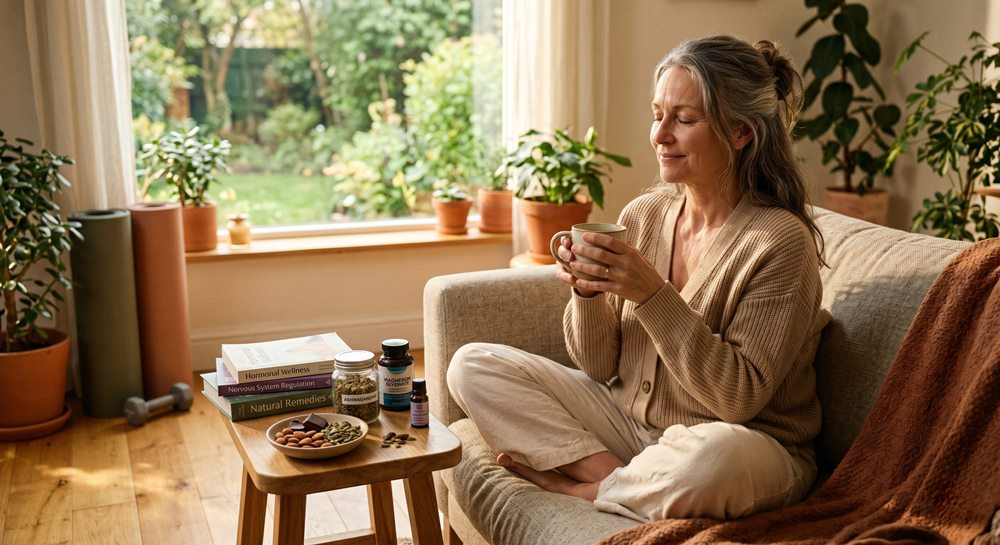
Hormonal Anxiety in Women: 10 Natural Remedies That Actually Work
There’s a specific kind of anxiety that arrives on schedule — a few days before your period, during ovulation, in the weeks before menopause symptoms flare, or as a constant companion with PCOS. It feels different from situational anxiety because it is different. Hormonal anxiety is driven by biochemical changes in your brain, not by your circumstances.
You’re not “overreacting.” You’re not weak. Your estrogen, progesterone, and cortisol levels are fluctuating in ways that directly alter your brain chemistry — affecting GABA (your calming neurotransmitter), serotonin (mood stability), and your nervous system’s fight-or-flight threshold.
This guide explains why hormones trigger anxiety and gives you 10 evidence-based natural remedies that address the root causes rather than just masking symptoms.
Why Hormones Trigger Anxiety
Estrogen and GABA. Estrogen supports GABA production — your brain’s primary calming chemical. When estrogen drops (premenstrually, postpartum, or during perimenopause), GABA levels fall too, leaving your nervous system more excitable and reactive.
Progesterone and calm. Progesterone has a direct anti-anxiety effect through its metabolite allopregnanolone, which acts similarly to benzodiazepines on brain receptors. When progesterone drops sharply (late luteal phase, perimenopause), this natural calming effect vanishes.
Cortisol and estrogen. Estrogen normally helps buffer the cortisol stress response. As estrogen fluctuates or declines, cortisol’s effects are amplified — you feel more stressed by the same situations that were manageable before.
The 10 Natural Remedies
1 Magnesium — The Missing Mineral
Magnesium is arguably the single most important nutrient for hormonal anxiety. It regulates the HPA axis (your stress response system), supports GABA receptor function, and helps metabolize estrogen. Up to 75% of women don’t get adequate magnesium from diet alone, and stress further depletes it — creating a vicious cycle.
What to take: Magnesium glycinate (best for anxiety and sleep) or magnesium threonate (crosses the blood-brain barrier). Start with 200mg at dinner, increase to 400mg if tolerated. Topical magnesium oil (sprayed on skin) provides additional benefit, especially before bed.
Food sources: Pumpkin seeds, dark chocolate (70%+), almonds, spinach, black beans, avocado.
2 Ashwagandha — Cortisol’s Natural Antagonist
Ashwagandha (Withania somnifera) is the most-studied adaptogenic herb for anxiety. Clinical trials consistently show it reduces cortisol levels by 23-30% and significantly decreases anxiety scores on standardized scales. It works by modulating the stress response system over time.
What to take: 300mg of a standardized root extract (KSM-66 or Sensoril are well-studied brands) twice daily. Effects build over 4-8 weeks. Take consistently — it’s not a quick-fix rescue remedy.
3 Blood Sugar Stabilization
Unstable blood sugar directly triggers anxiety through adrenaline and cortisol release. When blood sugar drops (after eating refined carbs, skipping meals, or during fasting), your body perceives it as a threat and activates the fight-or-flight response. For women with PCOS or insulin resistance, this roller coaster is amplified.
Action plan: Eat within 1 hour of waking. Include protein, healthy fat, and complex carbs at every meal. Snack between meals if there are more than 4 hours between eating. Avoid sugary drinks, candy, and refined carbs on an empty stomach. A 10-15 minute walk after meals blunts blood sugar spikes.
4 Targeted Exercise (Not Too Much)
Moderate exercise reduces anxiety by boosting endorphins, GABA, and serotonin. However, excessive high-intensity exercise can increase cortisol and worsen hormonal anxiety — especially in the week before your period or during perimenopause.
The sweet spot: 30 minutes of moderate activity 4-5 days per week. Walking, swimming, yoga, Pilates, and light strength training are ideal. Reduce intensity during the luteal phase (days 21-28) if anxiety worsens premenstrually. Yoga specifically has been shown to reduce anxiety and improve hormonal balance. See our PCOS workout guide for a structured plan.
5 Nervous System Regulation Practices
Hormonal anxiety often manifests as a chronically activated sympathetic nervous system (fight-or-flight). Practices that activate the parasympathetic (rest-and-digest) system can provide relief within minutes.
Effective techniques: Vagal toning: Splash cold water on your face, hum, gargle, or practice extended exhale breathing (inhale 4 counts, exhale 8 counts). Box breathing: Inhale 4 counts, hold 4, exhale 4, hold 4. Repeat for 3-5 minutes. Progressive muscle relaxation: Tense each muscle group for 5 seconds, then release. Work from feet to head. Bilateral stimulation: Cross-body movements like alternating taps on knees or butterfly hugs engage both brain hemispheres and reduce anxiety.
6 Omega-3 Fatty Acids
Omega-3s (EPA in particular) have anti-inflammatory effects on the brain and support serotonin receptor function. Multiple meta-analyses confirm that omega-3 supplementation significantly reduces anxiety symptoms.
What to take: Fish oil providing at least 1,000mg EPA + 500mg DHA daily. Higher EPA ratios (2:1 EPA to DHA) are more effective for mood and anxiety. Plant-based option: algae-derived omega-3. Food sources: fatty fish 3 times weekly (salmon, sardines, mackerel), walnuts, flaxseed.
7 Gut Health Optimization
Your gut produces approximately 95% of your body’s serotonin and communicates directly with your brain via the vagus nerve. Gut dysbiosis (imbalanced gut bacteria) is strongly associated with both anxiety and hormonal imbalance. The gut microbiome also plays a critical role in estrogen metabolism through the “estrobolome.”
Action plan: Include fermented foods daily — yogurt, kefir, sauerkraut, kimchi, miso. Eat 30+ different plant foods per week for microbial diversity. Take a high-quality probiotic containing Lactobacillus and Bifidobacterium strains. Increase prebiotic fiber — garlic, onions, leeks, asparagus, oats, bananas. Reduce artificial sweeteners, which can harm gut bacteria.
8 B Vitamins (Especially B6)
Vitamin B6 is essential for the production of serotonin, GABA, and dopamine. It also helps metabolize excess estrogen (relevant for estrogen-dominance-driven anxiety). B6 deficiency is common in women taking or who have taken hormonal birth control.
What to take: B6 as P5P (pyridoxal-5-phosphate, the active form): 25-50mg daily. Better yet, take a B-complex that provides all B vitamins. Do not exceed 100mg B6 daily. Food sources: chickpeas, turkey, bananas, potatoes, pistachios, sunflower seeds.
9 Sleep Hygiene and Circadian Rhythm
Sleep deprivation amplifies anxiety by up to 30% — and hormonal disruptions (hot flashes, progesterone drops, cortisol spikes) often impair sleep quality. Fixing sleep is one of the most impactful anxiety interventions.
Key strategies: Maintain consistent sleep and wake times (even on weekends). Get morning sunlight within 30 minutes of waking — this sets your circadian clock and improves evening melatonin production. Stop screens 60 minutes before bed. Keep your bedroom cool (65°F/18°C). Try magnesium glycinate and/or tart cherry juice before bed. If racing thoughts prevent sleep, keep a notebook beside your bed — write down worries to “offload” them from your mind.
10 Herbal Support
Several herbs have demonstrated effectiveness specifically for hormonal anxiety in clinical studies:
Vitex (Chasteberry): Modulates prolactin and supports progesterone production. Particularly effective for PMS/PMDD-related anxiety. Take 20-40mg standardized extract daily in the morning.
Lemon balm (Melissa officinalis): Inhibits the enzyme that breaks down GABA, keeping GABA levels higher. Has a noticeable calming effect within 1-2 hours. Take 300-600mg daily or drink as tea.
Passionflower: Increases GABA availability and has been shown to be as effective as benzodiazepines for generalized anxiety in some studies, without the sedation or dependence. Take 250-500mg daily or as tea before bed.
Always consult your healthcare provider before starting herbal supplements, especially if you take medications, hormonal birth control, or are pregnant or breastfeeding.
When to Seek Professional Help
Natural remedies are powerful, but some situations call for professional support. Please reach out to a healthcare provider if anxiety is severe enough to interfere with your daily functioning, relationships, or work. If you experience panic attacks, persistent insomnia, or thoughts of self-harm, professional support can make a meaningful difference. A healthcare provider can also rule out thyroid disorders, which mimic hormonal anxiety closely.
Hormone testing (including estradiol, progesterone, cortisol, DHEA-S, and thyroid panel) can help identify the specific hormonal imbalance driving your anxiety, allowing for more targeted treatment.
Move Your Body, Calm Your Mind
Related Articles
- Menopause Brain Fog Remedies
- PCOS Workout Plan for Beginners
- Low Impact Workout for Women Over 50
- PCOS Hair Loss Regrowth Tips

Author: Kyren Abbot
Passionate about demystifying women's health, Kyren Abbot is a health contributor focused on holistic wellness. Through her writing, she aims to simplify complex health topics and empower women to thrive in every stage of life