
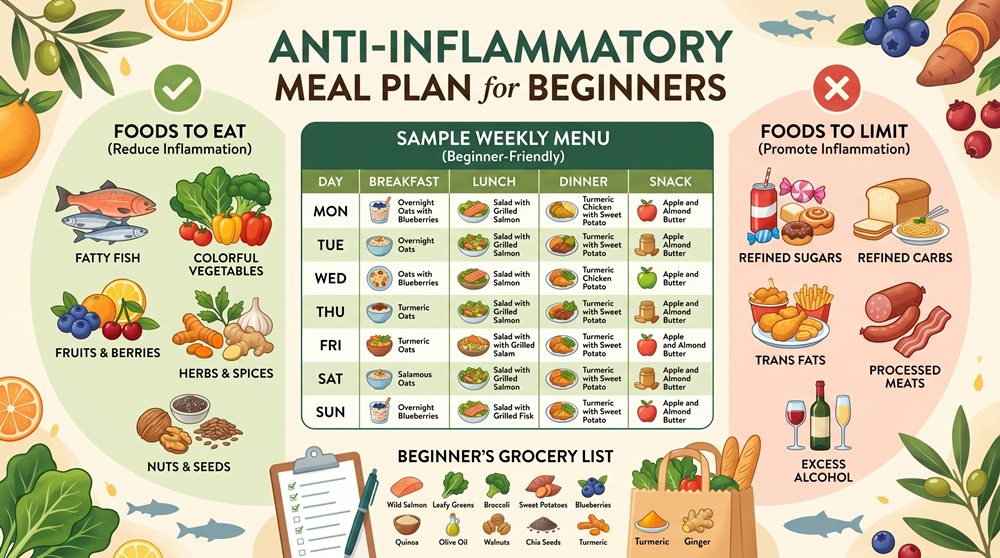
7-Day Anti-Inflammatory Meal Plan with Grocery List
Planning is the key to success with any dietary change, and an anti-inflammatory diet is no exception. This 7-day anti-inflammatory meal plan takes the guesswork out of your week — every meal is planned, every ingredient accounted for, and every recipe is beginner-friendly.
If you’re new to anti-inflammatory eating, we recommend starting with our complete beginner’s guide first. Then come back here with your grocery bags ready.
Before You Start: Prep Day (Sunday)
Spend about 90 minutes on Sunday afternoon preparing these basics. It will save you hours during the week:
Cook a large batch of quinoa (2 cups dry) and store in an airtight container. Wash and chop all leafy greens, bell peppers, and broccoli. Make a batch of anti-inflammatory salad dressing (olive oil, lemon juice, turmeric, garlic, black pepper). Portion out overnight oats for Monday and Wednesday. Marinate salmon fillets in ginger-garlic-lemon for Tuesday’s dinner.
The 7-Day Plan
Day 1 — Monday: Gentle Start
Day 2 — Tuesday: Omega-3 Boost
Day 3 — Wednesday: Plant-Powered
Day 4 — Thursday: Comfort Food
Day 5 — Friday: Fresh & Light
Day 6 — Saturday: Slow Weekend
Day 7 — Sunday: Reset & Prep
Complete Grocery List
This list covers everything you need for the entire week. Check what you already have before shopping to save money.
Produce
- Baby spinach (2 large bags)
- Kale (1 bunch)
- Arugula (1 small bag)
- Broccoli (2 heads)
- Cauliflower (1 head)
- Sweet potatoes (6 medium)
- Bell peppers — red, yellow, green (4 total)
- Cherry tomatoes (2 pints)
- Cucumber (1)
- Carrots (1 bag)
- Celery (1 bunch)
- Zucchini (2)
- Asparagus (1 bunch)
- Beets (3 medium)
- Snap peas (1 bag)
- Mushrooms (1 pack)
- Red onion (2)
- Garlic (2 heads)
- Fresh ginger root (1 piece)
- Lemons (4)
- Oranges (3)
- Bananas (3)
- Apples (2)
- Kiwi (2)
- Blueberries (2 pints)
- Mixed berries — fresh or frozen (1 bag)
- Avocados (4)
- Fresh herbs: basil, rosemary
Protein
- Wild salmon fillets (4 pieces)
- Chicken thighs (6 pieces)
- Chicken breast (2 pieces)
- Firm tofu (1 block)
- Canned sardines in olive oil (2 cans)
- Eggs (1 dozen, pasture-raised)
Pantry & Grains
- Rolled oats (1 large container)
- Quinoa (1 bag)
- Brown rice (1 bag)
- Whole grain bread or sourdough (1 loaf)
- Dried green or brown lentils (1 bag)
- Canned chickpeas (2 cans)
- Canned white beans (1 can)
- Canned diced tomatoes (2 cans)
- Chicken or vegetable bone broth (2 cartons)
- Extra virgin olive oil
- Balsamic vinegar
- Tahini
- Kalamata olives (1 small jar)
- Capers (1 small jar)
- Honey (1 jar)
- Pesto (1 jar, or make fresh)
- Granola (low sugar)
Nuts, Seeds & Dairy
- Walnuts
- Almonds (whole and sliced)
- Pumpkin seeds
- Pistachios
- Macadamia nuts
- Chia seeds
- Ground flaxseed
- Hemp seeds
- Almond butter
- Almond milk (unsweetened)
- Greek yogurt (plain)
- Goat cheese
- Feta cheese
- Coconut flakes (unsweetened)
- Dark chocolate 70%+ (1 bar)
- Dark chocolate chips (small bag)
- Dried cranberries (unsweetened)
Spices & Seasonings
- Ground turmeric
- Ground cinnamon
- Black pepper
- Red pepper flakes
- Sea salt
- Everything bagel seasoning
- Dried herbs: oregano, thyme
Estimated Weekly Cost
The total grocery cost for this meal plan is approximately $75-110 USD for one person, depending on your location and whether you choose organic options. The most cost-effective strategy is to buy nuts, seeds, grains, and spices in bulk, as they last for weeks.
Tips for Following This Plan
Be flexible with portions. This plan is designed for one person. Adjust quantities based on your appetite and caloric needs. Active individuals may need larger portions, especially of protein and grains.
Drink plenty of water and tea. Aim for 8 glasses of water daily. Green tea between meals adds extra anti-inflammatory catechins. Herbal teas like ginger and chamomile are also excellent choices.
Use leftovers strategically. This plan intentionally creates leftovers (lentil soup, slow-cooker stew) to reduce cooking time on busy days. Embrace leftovers — they’re your best friend in sustainable meal planning.
What’s Next?
Now that you have your weekly plan, dive deeper into specific meals:
Continue Reading
- ← Back to Beginner’s Complete Guide
- Anti-Inflammatory Breakfast Ideas for Busy Mornings
- Anti-Inflammatory Meal Prep for the Week
- Anti-Inflammatory Diet on a Budget

Author: Kyren Abbot
Passionate about demystifying women's health, Kyren Abbot is a health contributor focused on holistic wellness. Through her writing, she aims to simplify complex health topics and empower women to thrive in every stage of life