
Anti-Inflammatory Meal Plan for Beginners: Your Complete Guide to Healing Through Food
Chronic inflammation is at the root of many modern health problems — from joint pain and fatigue to heart disease and autoimmune conditions. The good news is that what you eat can either fuel inflammation or help fight it. An anti-inflammatory meal plan for beginners doesn’t require drastic changes or expensive superfoods. It starts with simple swaps and builds into a sustainable way of eating that supports your body’s natural healing process.
Whether you’re dealing with persistent aches, digestive issues, or simply want to feel more energized, this guide will walk you through everything you need to know — from understanding inflammation to building your first weekly meal plan.
Table of Contents
What Is Inflammation and Why Does It Matter?
Inflammation is your body’s natural defense mechanism. When you get a cut or catch a cold, acute inflammation rushes in to heal and protect you. This type of inflammation is short-lived and necessary.
However, chronic inflammation is a different story. It’s a low-grade, persistent inflammatory response that can simmer for months or years without obvious symptoms. Over time, it damages healthy cells, tissues, and organs — contributing to conditions such as heart disease, type 2 diabetes, arthritis, Alzheimer’s, and certain cancers.
Common signs of chronic inflammation include persistent fatigue, frequent infections, body aches and joint pain, digestive problems like bloating and constipation, skin issues such as acne or eczema, and brain fog or difficulty concentrating.
Anti-Inflammatory Foods to Eat
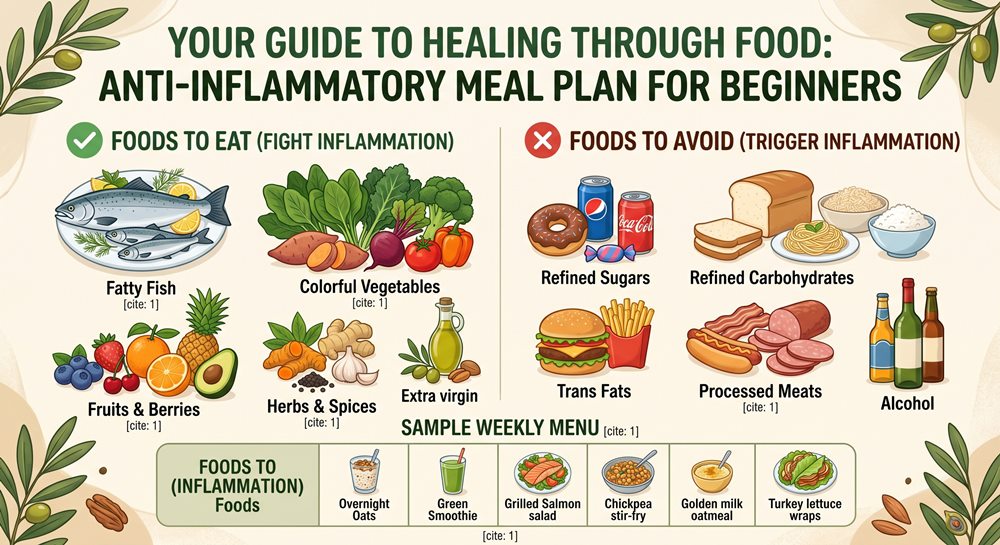
The foundation of an anti-inflammatory diet is built on whole, nutrient-dense foods that are rich in antioxidants, omega-3 fatty acids, and fiber. Here are the key categories:
Fatty Fish & Omega-3s
- Wild salmon
- Sardines
- Mackerel
- Anchovies
- Chia seeds & flaxseeds
- Walnuts
Colorful Vegetables
- Leafy greens (spinach, kale)
- Broccoli & cauliflower
- Sweet potatoes
- Beets
- Bell peppers
- Tomatoes
Fruits & Berries
- Blueberries
- Strawberries
- Cherries
- Oranges & citrus
- Pineapple
- Avocado
Herbs & Spices
- Turmeric (with black pepper)
- Ginger
- Garlic
- Cinnamon
- Rosemary
- Green tea & matcha
Other excellent anti-inflammatory staples include extra virgin olive oil, nuts (especially almonds and walnuts), whole grains like quinoa and brown rice, legumes such as lentils and chickpeas, and fermented foods like yogurt, kimchi, and sauerkraut.
Foods That Trigger Inflammation
Just as certain foods calm inflammation, others actively promote it. Reducing or eliminating these inflammatory triggers is just as important as adding beneficial foods:
Top Inflammatory Foods to Limit:
Refined sugars and high-fructose corn syrup — found in sodas, candy, pastries, and many packaged foods. Refined carbohydrates — white bread, white pasta, and white rice that spike blood sugar. Trans fats and excessive omega-6 oils — found in fried foods, margarine, and many processed snacks. Processed meats — hot dogs, bacon, sausage, and deli meats containing nitrates and preservatives. Excessive alcohol — more than moderate consumption increases inflammatory markers.
You don’t need to eliminate every single item overnight. The goal is to gradually shift the balance — eating more anti-inflammatory foods while reducing inflammatory ones.
Short-Term Plan: Your First 7 Days
Starting an anti-inflammatory meal plan can feel overwhelming, but the first week should focus on simplicity and momentum. Here’s your strategy:
Week 1 Goals
Day 1-2: Assess and remove. Go through your pantry and fridge. Identify the most inflammatory items — sugary drinks, processed snacks, white bread. You don’t have to throw everything away, but move them out of easy reach.
Day 3-4: Add before you subtract. Instead of focusing on what you can’t eat, add one anti-inflammatory food to every meal. Put spinach in your morning eggs. Add berries to your yogurt. Use olive oil instead of butter.
Day 5-7: Build your first full day. Plan one complete day of anti-inflammatory eating from breakfast to dinner. Use the sample meal plan below as your template.
Long-Term Plan: Building a 30-Day Habit
After your initial week, it’s time to build consistency. A 30-day anti-inflammatory eating plan establishes the habits that make this a lifestyle, not just a temporary diet.
Week 2: Expand Your Repertoire
Try two new anti-inflammatory recipes. Experiment with turmeric in a golden milk latte, make a big batch of lentil soup, or try baking salmon with ginger and garlic. The more variety you have, the less likely you are to get bored.
Week 3: Master Meal Prep
Dedicate 1-2 hours on Sunday to prep basics for the week: cook a batch of quinoa or brown rice, wash and chop vegetables, prepare overnight oats for three mornings, and portion out nuts and seeds for snacking. Having healthy options ready to go is the single biggest predictor of success.
Week 4: Fine-Tune and Reflect
By now, you should notice changes — less bloating, better energy, clearer skin, or reduced joint stiffness. Keep a simple food journal noting what you eat and how you feel. This helps you identify which foods work best for your body and which ones may still be triggering issues.
After 30 days, most people find that their cravings for processed foods have diminished significantly. The anti-inflammatory way of eating starts to feel natural and even enjoyable.
Sample Weekly Anti-Inflammatory Meal Plan
Here’s a practical 7-day meal plan that’s easy to follow and doesn’t require advanced cooking skills:
| Day | Breakfast | Lunch | Dinner | Snack |
|---|---|---|---|---|
| Mon | Overnight oats with blueberries, chia seeds & walnuts | Mixed green salad with grilled salmon, avocado & olive oil dressing | Turmeric chicken with roasted sweet potatoes & steamed broccoli | Apple slices with almond butter |
| Tue | Green smoothie (spinach, banana, ginger, flaxseed) | Lentil soup with a side of whole grain bread | Baked mackerel with quinoa & roasted bell peppers | Handful of mixed nuts |
| Wed | Scrambled eggs with sautéed spinach & tomatoes | Chickpea & vegetable stir-fry over brown rice | Grilled salmon with garlic asparagus & sweet potato mash | Greek yogurt with cherries |
| Thu | Golden milk oatmeal with turmeric, cinnamon & berries | Turkey lettuce wraps with avocado & pickled onions | Sheet pan Mediterranean chicken with zucchini & olives | Celery sticks with hummus |
| Fri | Berry smoothie bowl with hemp seeds & coconut flakes | Warm quinoa bowl with roasted beets, kale & tahini dressing | Herb-crusted sardines with roasted cauliflower & brown rice | Dark chocolate (70%+) squares |
| Sat | Avocado toast on whole grain bread with poached egg | Minestrone soup with white beans & vegetables | Slow-cooker anti-inflammatory bone broth stew with root vegetables | Orange slices with walnuts |
| Sun | Veggie omelet with mushrooms, peppers & fresh herbs | Leftover stew with a fresh side salad | Baked wild salmon with pesto, roasted cherry tomatoes & sweet potato | Homemade trail mix (nuts, seeds, dried berries) |
Beginner’s Anti-Inflammatory Grocery List
Keep this list handy for your next shopping trip:
Produce
- Spinach and kale
- Broccoli and cauliflower
- Sweet potatoes
- Bell peppers (all colors)
- Tomatoes
- Avocados
- Blueberries and strawberries
- Lemons and oranges
- Ginger root and garlic
- Fresh herbs (basil, rosemary)
Protein & Pantry
- Wild salmon (fresh or frozen)
- Sardines (canned in olive oil)
- Chicken breast (organic)
- Eggs (pasture-raised)
- Lentils and chickpeas
- Quinoa and brown rice
- Extra virgin olive oil
- Walnuts and almonds
- Chia seeds and flaxseeds
- Turmeric and cinnamon
Practical Tips for Success
1. Start with Swaps, Not Sacrifices
Replace white rice with brown rice or quinoa. Use olive oil instead of vegetable oil. Choose dark chocolate over milk chocolate. Swap sodas for sparkling water with lemon. These small changes add up to significant inflammation reduction over time.
2. Cook in Batches
Prepare large portions of grains, roasted vegetables, and proteins on the weekend. Store them in containers for easy assembly throughout the week. A pre-made bowl of quinoa with pre-chopped veggies means a healthy meal is only 5 minutes away.
3. Season Generously
Anti-inflammatory spices like turmeric, ginger, garlic, and cinnamon are some of the most potent inflammation fighters available. Use them liberally in every meal. Always pair turmeric with a pinch of black pepper to boost absorption of curcumin by up to 2,000%.
4. Stay Hydrated
Water is essential for flushing inflammatory compounds from your body. Aim for 8 glasses per day. Green tea is an excellent addition — it contains catechins with powerful anti-inflammatory properties.
5. Don’t Aim for Perfection
The 80/20 rule works well here: eat anti-inflammatory foods 80% of the time, and allow yourself flexibility the other 20%. Stress about food is itself inflammatory, so enjoy the process.
Frequently Asked Questions
How quickly will I see results?
Most people notice improvements in energy and digestion within the first 1-2 weeks. Visible changes in skin, joint comfort, and overall well-being typically appear within 3-4 weeks of consistent anti-inflammatory eating.
Is an anti-inflammatory diet expensive?
Not necessarily. While wild salmon and organic produce can be pricey, many anti-inflammatory staples — lentils, beans, frozen vegetables, canned sardines, oats, and spices — are very affordable. Check out our guide on eating anti-inflammatory on a budget for more tips.
Can I still eat out?
Absolutely. Look for grilled fish or chicken, vegetable-based dishes, olive oil-dressed salads, and grain bowls. Avoid fried foods, creamy sauces, and bread baskets. Most restaurants can accommodate simple requests like cooking with olive oil instead of butter.
Do I need supplements?
A well-planned anti-inflammatory diet should provide most nutrients you need. However, omega-3 fish oil, vitamin D, and a good probiotic can be helpful additions. Always consult with a healthcare professional before starting any supplement regimen.
Ready to Start Your Anti-Inflammatory Journey?
Download our free printable grocery list and 7-day meal plan template to make your first week as easy as possible.
Continue reading: 7-Day Anti-Inflammatory Meal Plan with Grocery List →
Related Articles in This Series
- 7-Day Anti-Inflammatory Meal Plan with Grocery List
- Anti-Inflammatory Breakfast Ideas for Busy Mornings
- Anti-Inflammatory Lunch Recipes for Work
- Anti-Inflammatory Dinner Plan for the Whole Family
- Anti-Inflammatory Snacks and Smoothies Guide
- Anti-Inflammatory Meal Prep for the Week
- Anti-Inflammatory Diet on a Budget
- Long-Term Anti-Inflammatory Eating: 30-Day Plan
- Anti-Inflammatory Foods to Avoid and Best Substitutes

Author: Kyren Abbot
Passionate about demystifying women's health, Kyren Abbot is a health contributor focused on holistic wellness. Through her writing, she aims to simplify complex health topics and empower women to thrive in every stage of life