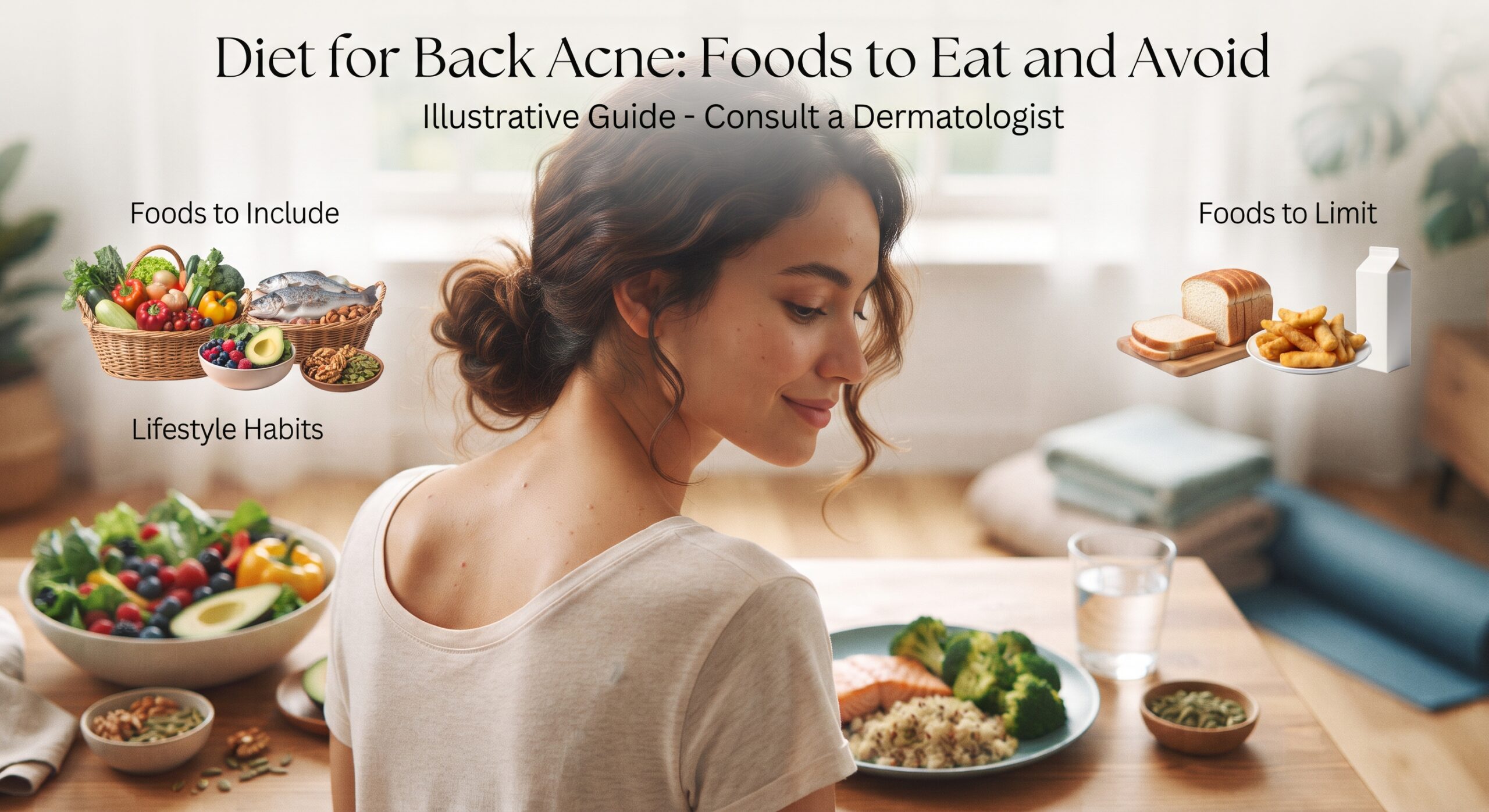
Diet for Back Acne: Foods to Eat and Avoid
A good diet for back acne will not clear breakouts on its own, but what you eat can influence how often and how severely acne flares. Back acne, sometimes called body acne, is common and often appears alongside breakouts on the chest and shoulders. This guide explains what dermatology sources say about diet, which foods may aggravate back acne, which foods are worth including, and which everyday habits matter as much as your meals.
Medical disclaimer: This article is for general information only and is not medical advice. Always consult a qualified healthcare professional or dermatologist before changing your diet or starting a treatment, especially if you have an existing health condition.
How Diet Affects Back Acne
Acne develops when oil glands, hair follicles, and bacteria interact under the skin. Genetics, hormones, medications, and skin care habits all contribute. Diet is one piece of this picture. Current dermatology guidance suggests that eating patterns may worsen acne that already exists rather than creating it from nothing.
Body acne often responds more slowly than facial acne, so expect changes to take several weeks. Most of the diet research in acne has run for roughly 10 to 12 weeks, which gives a realistic timeline for judging whether a change is helping.
Foods That May Worsen Back Acne
High-Glycemic Foods
Refined carbohydrates such as white bread, sugary snacks, and potato chips raise blood sugar quickly. Blood sugar spikes may increase insulin levels and inflammation, which can aggravate breakouts. Several small studies have found that a low-glycemic eating pattern reduces acne compared with a usual diet. Low-glycemic choices include most fresh vegetables, some fruits, beans, and steel-cut oats.
You do not need to eliminate carbohydrates entirely. Swapping refined grains for whole grains and pairing carbohydrates with protein or fiber can soften blood sugar spikes.
Cow’s Milk
Some studies have linked cow’s milk to acne, particularly skim milk. Researchers have proposed that hormones and growth-related compounds in milk may stimulate oil production, although the evidence is not conclusive. Many people do not react to dairy at all. A practical approach is to reduce milk for four to six weeks, track your skin, and then decide whether to continue.
Fried and Heavily Processed Foods
Fried foods and processed snacks often contain large amounts of vegetable oils rich in omega-6 fatty acids. Some researchers believe an imbalance between omega-6 and omega-3 fats may promote inflammation. This evidence is limited, so the sensible takeaway is to moderate these foods rather than cut them out completely.
Foods That May Support Clearer Skin
Low-Glycemic Fruits and Vegetables
Colorful produce provides antioxidants, which help the body manage oxidative stress. Berries, leafy greens, bell peppers, and citrus fruits are good everyday choices. Filling half your plate with vegetables at each meal is an easy habit to maintain.
Omega-3 Sources
Fatty fish, flaxseeds, and walnuts provide omega-3 fats. Including them regularly helps balance your overall fat intake, which may be useful if your diet is heavy in fried foods.
Zinc-Rich Foods
Zinc plays a role in normal skin function and immune response. Food sources include lean meat, legumes, oysters, and pumpkin seeds. Zinc supplements can have side effects and should only be taken under medical guidance, because excessive zinc can interfere with other nutrients such as copper.
Fermented Foods
Yogurt, kefir, sauerkraut, and kimchi contain live cultures that may support gut health. The link between gut health and acne is still being studied, so think of fermented foods as a healthy addition to your diet rather than a targeted acne treatment.
Lifestyle Habits That Matter Too
Shower After Sweating
Sweat, oil, and friction from tight clothing can trap material in pores on your back. Shower soon after workouts, and change out of sweaty clothes promptly. Washing workout clothes after each session helps prevent buildup.
Choose a Gentle Cleansing Routine
Cleanse your back once or twice daily with a mild, non-comedogenic cleanser. Avoid harsh scrubs, loofahs, and abrasive brushes, which can irritate the skin and make inflammation worse. Wash bed sheets and towels regularly, especially if you sleep on your back.
Manage Stress
Stress can influence hormones that affect oil production, and it may make breakouts feel more frequent. Regular exercise, sleep, meditation, breathing exercises, and enjoyable hobbies all help manage stress. These habits support overall wellbeing even if their direct effect on acne is modest.
Stay Hydrated
Drinking water throughout the day supports general health and helps keep skin comfortable. There is no proven rule that everyone needs exactly eight glasses daily, and water will not “detox” your skin or cure acne. Drink enough to stay comfortable and adjust based on heat, activity, and your doctor’s advice if you have a condition that affects fluid intake.
When to See a Dermatologist
Consider an appointment with a dermatologist if your breakouts are painful, deep, or spreading, if they leave scars or dark marks, or if they do not improve after several months of over-the-counter care. Prescription treatments, including topical and oral medications, can address back acne more effectively than diet alone. Diet changes work best as a supplement to proper treatment.
Frequently Asked Questions
Can changing my diet clear back acne?
For most people, diet works best alongside a consistent skin care routine or medical treatment. Some people notice improvement after several weeks of reducing high-glycemic foods, but results vary. If your acne is severe, see a dermatologist.
Should I stop eating dairy completely?
Not necessarily. Try reducing dairy for four to six weeks, monitor your skin, and then decide whether to continue. If you have a dairy allergy or intolerance, or if you are unsure how to replace key nutrients such as calcium, speak with a healthcare professional or registered dietitian.
Sources
- American Academy of Dermatology, “Diet and Acne”: https://www.aad.org/public/diseases/acne/causes/diet
- American Academy of Dermatology, “Can the right diet get rid of acne?”: https://www.aad.org/diseases/acne/acne-diet
- Cutis, “Update on Diet and Acne” (2019): https://mdedge.com/content/update-diet-and-acne

Author: Kyren Abbot
Passionate about demystifying women's health, Kyren Abbot is a health contributor focused on holistic wellness. Through her writing, she aims to simplify complex health topics and empower women to thrive in every stage of life