
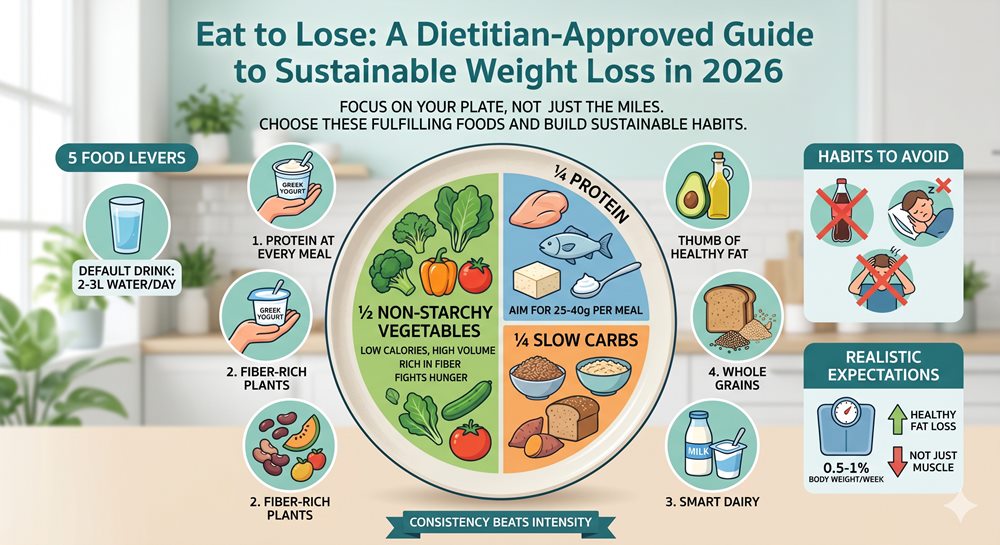
Eat to Lose: A Dietitian-Approved Guide to Sustainable Weight Loss in 2026
Exercise gets the spotlight, but the plate does most of the work. Here is how to build a weight-loss diet you can actually keep.
In short: You cannot outrun a bad diet. Sustainable fat loss comes from a modest, protein- and fiber-rich calorie deficit you can live with for months — not a two-week crash. The foods below are the ones nutrition researchers consistently rank as the best tools for losing weight without losing muscle, mood, or energy.
Why food matters more than exercise for weight loss
Energy expenditure from exercise is surprisingly small for most people: a 45-minute brisk walk burns roughly 200–300 calories, which is easily offset by one muffin. Randomized trials at the NIH and King’s College London show that when people cut 500 calories per day through diet alone, weight loss at 12 weeks is very similar to cutting 250 calories and adding daily exercise. Exercise remains crucial for health, mood, and muscle retention — but diet drives the deficit.
The good news: you do not have to count every calorie. You need to change what shows up on your plate.
The 5 food levers that do the heavy lifting
1. Protein at every meal
Protein is the most satiating macronutrient and protects lean muscle during weight loss. Current research suggests 1.2–1.6 g of protein per kilogram of body weight per day is optimal while dieting. Good choices include Greek yogurt, eggs, cottage cheese, skinless poultry, fish, tofu, tempeh, lentils, and edamame. Aim for 25–40 g per meal.
2. Fiber-rich plants at high volume
Vegetables, fruit, beans, and whole grains deliver large portions for few calories. They also slow gastric emptying and feed a gut microbiome now linked to appetite regulation via short-chain fatty acids. A target of 25–35 g of fiber per day is strongly correlated with weight stability over decades.
3. Smart dairy (when tolerated)
Unsweetened Greek yogurt, kefir, cottage cheese, and skim or low-fat milk are protein- and calcium-dense, and are associated with easier weight maintenance in cohort studies. If dairy is not for you, fortified soy milk and calcium-set tofu are reasonable substitutes.
4. Whole grains over refined grains
Oats, barley, quinoa, brown rice, and whole-grain bread deliver fiber, B vitamins, and slow-digesting carbohydrates. They blunt post-meal glucose spikes and reduce the mid-afternoon cravings that derail most diets.
5. Water as the default drink
Calories from liquids (soda, sweetened coffee, alcohol, “fruit drinks”) don’t trigger the same satiety signals as chewed food. Aim for 2–3 L of water per day from all sources. Drinking a glass of water before meals is repeatedly shown to lower calorie intake by roughly 10–15%.
The plate method: no math, no apps
Instead of tracking, try this at every meal:
- ½ the plate: non-starchy vegetables (leafy greens, peppers, broccoli, cucumber, tomato, mushrooms).
- ¼ the plate: protein (palm-sized portion of chicken, fish, tofu, beans, or eggs).
- ¼ the plate: slow carbs (brown rice, quinoa, sweet potato, whole-grain pasta).
- Thumb of healthy fat: olive oil, avocado, nuts, seeds.
Used consistently, the plate method delivers a natural 300–500 calorie deficit for most adults — without counting.
A sample one-day menu (≈1,600 kcal, 120 g protein, 35 g fiber)
- Breakfast: Greek yogurt with berries, chia seeds, and a tablespoon of almonds.
- Lunch: Big salad with grilled chicken or chickpeas, quinoa, avocado, olive oil, and lemon.
- Snack: Apple + 20 g cheese or a boiled egg.
- Dinner: Baked salmon or tofu, roasted broccoli and peppers, small sweet potato.
- Evening (optional): Herbal tea or a small square of 85% dark chocolate.
Habits that quietly sabotage weight loss
- Liquid calories. Sugar-sweetened drinks and cocktails can add 300–800 unnoticed calories per day.
- Skipping meals. This often backfires: you overeat the next meal and lose lean mass.
- Ultra-processed snacks. Engineered for overconsumption — even “healthy” protein bars can push you over your calorie budget.
- Short sleep. Less than 6 hours a night raises ghrelin (hunger) and lowers leptin (fullness), leading to an extra 250–300 calories the next day on average.
- Chronic stress. Elevated cortisol promotes abdominal fat storage and carbohydrate cravings.
What about GLP-1 medications?
Drugs like semaglutide and tirzepatide have changed the conversation on obesity and can produce 10–20% weight loss when medically indicated. They work largely by reducing appetite — which still requires good nutrition choices. Anyone considering these medications should do so with a licensed clinician and should aim to preserve lean mass with adequate protein (at least 1.4 g/kg/day) and resistance training. This article is not medical advice; talk with your doctor.
Setting realistic expectations
Healthy, sustainable fat loss is roughly 0.5–1% of body weight per week. Faster loss is usually water and muscle, both of which return. Expect plateaus every 4–6 weeks — they are a sign your body is adapting, not failing. Recalibrate by walking more, tightening portion sizes slightly, or taking a planned 1–2 week diet break at maintenance calories.
Build the plate, hit your protein, drink the water, sleep the hours. Consistency beats intensity — every single time.

Author: Kyren Abbot
Passionate about demystifying women's health, Kyren Abbot is a health contributor focused on holistic wellness. Through her writing, she aims to simplify complex health topics and empower women to thrive in every stage of life