
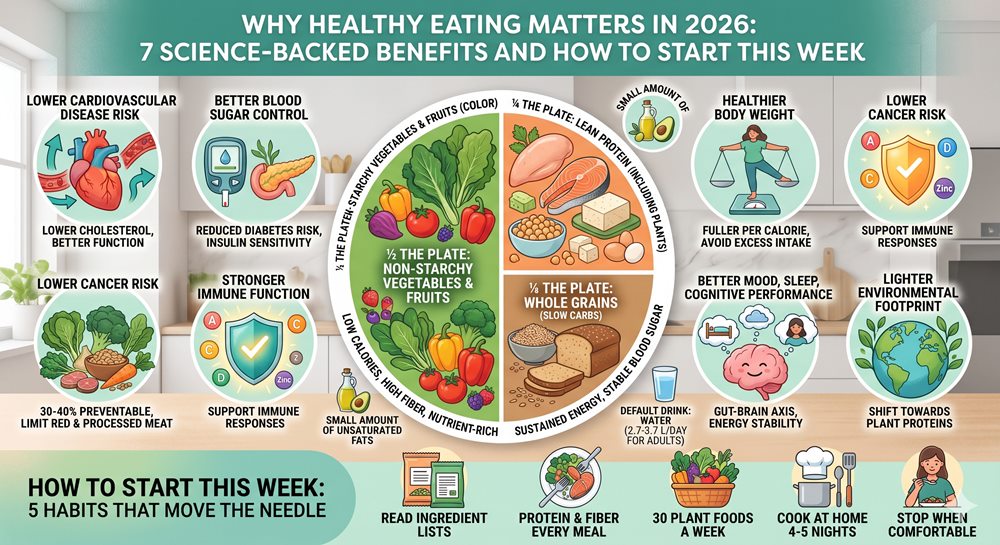
Why Healthy Eating Matters in 2026: 7 Science-Backed Benefits and How to Start This Week
A balanced plate is still the most cost-effective, low-risk intervention we have for chronic disease. Here is what the latest dietary science actually supports — and what to do with it.
In short: Roughly eight in ten chronic diseases, including heart disease and type 2 diabetes, are driven in part by diet, physical activity, and tobacco use. You do not need a complicated protocol. A predominantly plant-based, minimally processed diet — built around produce, whole grains, legumes, healthy fats, and adequate protein — improves nearly every measurable health outcome.
What “healthy eating” means in 2026
The most recent guidance from the World Health Organization (WHO), the 2020–2025 Dietary Guidelines for Americans, and the EAT–Lancet Commission converges on a simple pattern: fill half your plate with vegetables and fruit, a quarter with whole grains, and a quarter with lean protein (including plant proteins). Add a small amount of unsaturated fat, and keep added sugars under 10% of daily calories and sodium under roughly 2,300 mg per day.
This is sometimes called a Mediterranean-style or flexitarian pattern. Unlike fad diets, it has been studied for decades across hundreds of thousands of people, and the direction of the evidence has not meaningfully changed.
7 science-backed benefits of healthy eating
1. Lower risk of cardiovascular disease
Meta-analyses of cohort studies consistently show that diets rich in fruit, vegetables, legumes, nuts, and whole grains lower the risk of coronary heart disease and stroke. Replacing saturated fat with unsaturated fat from olive oil, nuts, and fatty fish reduces LDL cholesterol and improves arterial function.
2. Better blood sugar control and diabetes prevention
Whole grains, pulses, and non-starchy vegetables have a low glycemic load and improve insulin sensitivity. Large prospective studies suggest that adhering to a Mediterranean or DASH-style diet can reduce the risk of developing type 2 diabetes by around 20–30%.
3. Healthier body weight — without crash dieting
High-fiber, high-water-volume foods (vegetables, fruit, beans, oats) are more filling per calorie than ultra-processed snacks. A controlled 2019 NIH trial showed people eating an ultra-processed diet consumed about 500 extra calories per day compared with a minimally processed diet — without realizing it.
4. Lower risk of certain cancers
The American Institute for Cancer Research estimates that roughly 30–40% of cancers are potentially preventable through diet, physical activity, and weight management. Fiber, cruciferous vegetables, and limiting processed and red meat are consistent themes.
5. Stronger immune function
Vitamins A, C, D, zinc, selenium, and polyphenols support normal immune responses. Most of these are efficiently delivered by a diet that includes leafy greens, citrus, eggs, seafood, seeds, and legumes — typically more effectively than isolated supplements.
6. Better mood, sleep, and cognitive performance
Emerging research on the gut–brain axis (SMILES trial, PREDIMED-Plus) links Mediterranean-style eating to lower rates of depression and slower age-related cognitive decline. Stable blood sugar also reduces afternoon energy crashes and supports deeper sleep.
7. A lighter environmental footprint
Shifting just one-third of animal protein to plant protein lowers the carbon, land, and water footprint of an average diet by roughly a quarter, according to the FAO. Healthy eating and planetary health point in the same direction.
What a genuinely balanced day looks like
Dietitians increasingly teach the Healthy Eating Plate model from the Harvard T.H. Chan School of Public Health rather than strict calorie counting. A realistic day might look like:
- Breakfast: Greek yogurt with berries, walnuts, and oats.
- Lunch: Grain bowl with quinoa, chickpeas, roasted vegetables, feta, and olive oil.
- Snack: An apple with a tablespoon of peanut butter, or a handful of almonds.
- Dinner: Baked salmon or tofu, a big mixed salad, and a small portion of brown rice or sweet potato.
- Hydration: Water as the default drink; coffee and unsweetened tea count. The U.S. National Academies suggest about 2.7 L/day for women and 3.7 L/day for men, including food moisture.
5 habits that actually move the needle
- Read the ingredient list, not just the nutrition label. Short lists of recognizable ingredients are usually the least processed.
- Eat protein and fiber at every meal. This is the simplest lever for appetite control and stable energy.
- Aim for 30 plant foods a week. Variety — not quantity — is the strongest predictor of a healthy gut microbiome in the American Gut Project.
- Cook at home at least 4–5 nights a week. Home cooking is associated with lower calorie, sugar, and sodium intake regardless of cuisine.
- Stop eating when comfortable, not stuffed. Practicing mindful, distraction-free meals is one of the best-supported interventions for weight stability.
What to put less of on your plate
The evidence against certain foods is strong enough to highlight: ultra-processed snacks, sugar-sweetened beverages (including most “fruit drinks”), processed meats (classified by the WHO/IARC as a Group 1 carcinogen), and excess alcohol. You do not need zero tolerance — you need a pattern that keeps these foods occasional rather than daily.
The bottom line
The benefits of healthy eating are not seasonal, trendy, or overhyped. They are some of the most robust findings in all of modern medicine. A varied, mostly plant-based pattern, built from real food, will lower your disease risk, lift your energy, and — over years — add healthy, active time to your life. Start with one meal, one habit, and one week.
Ready to build the habit? Pick one meal tomorrow and fill half the plate with color. That is the whole strategy.

Author: Kyren Abbot
Passionate about demystifying women's health, Kyren Abbot is a health contributor focused on holistic wellness. Through her writing, she aims to simplify complex health topics and empower women to thrive in every stage of life