
30-Day Anti-Inflammatory Meal Plan: Build a Lasting Habit Week by Week
Most diet plans fail because they try to change everything at once. The 30-day anti-inflammatory meal plan in this guide takes a different approach: it introduces changes incrementally, builds habits one week at a time, and ends with a lifestyle that feels natural rather than forced.
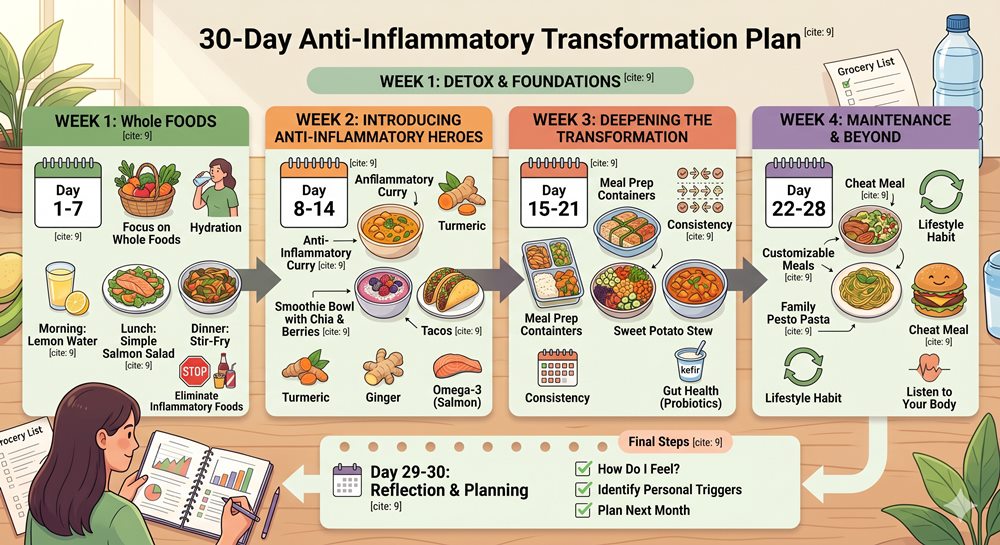
Week 1: Foundation (Days 1–7)
Theme: Add before you subtract. Don’t remove anything yet. Just add anti-inflammatory foods to what you’re already eating.
Week 1 Goals
- Add omega-3s to 2 meals per day (salmon, sardines, walnuts, flaxseed)
- Include 1 serving of berries daily
- Cook with turmeric and ginger at least once per day
- Drink 8 glasses of water
- Add a handful of leafy greens to one meal
What to expect: Probably nothing dramatic. That’s fine. You’re building a foundation.
Week 1 Sample Daily Plan
Breakfast: Overnight oats with frozen berries, walnuts, and ground flaxseed
Lunch: Your usual lunch + a side salad with olive oil and lemon
Dinner: Turmeric salmon with whatever vegetables you have
Snack: Apple + almond butter
Week 2: Replace (Days 8–14)
Theme: Swap inflammatory staples for anti-inflammatory alternatives.
Week 2 Swaps
- White rice → brown rice or quinoa
- Vegetable oils (canola, sunflower) → olive oil or avocado oil
- Sugary breakfast cereal → oatmeal or eggs
- Soda and juice → water, herbal tea, or sparkling water with lemon
- Processed snacks → nuts, seeds, or fruit
What to expect: Some carb cravings if you’ve been eating a lot of refined carbohydrates. These typically resolve by Day 10–11.
Week 2 Sample Daily Plan
Breakfast: Scrambled eggs with turmeric, spinach, and whole grain toast
Lunch: Brown rice bowl with roasted vegetables and tahini dressing
Dinner: Chicken and sweet potato curry over quinoa
Snack: Walnuts + 2 squares dark chocolate
Week 3: Optimize (Days 15–21)
Theme: Fine-tune portions, timing, and food quality.
Week 3 Focus Areas
- Eat the rainbow: aim for 5 different colored vegetables each day
- Optimize protein timing: include protein at every meal
- Reduce alcohol to 1 drink or fewer per day (or eliminate)
- Add fermented foods: yogurt, kefir, kimchi, or sauerkraut daily
- Get 7-8 hours of sleep (sleep deprivation increases inflammatory markers)
What to expect: This is typically when people start noticing real changes — better energy, reduced joint discomfort, improved digestion.
Week 4: Sustain (Days 22–30)
Theme: Build systems for the long term.
Week 4 Systems to Build
- Establish a weekly meal prep routine (Sunday, 2 hours)
- Create a personal list of 10 anti-inflammatory meals you love
- Stock your pantry with staples so healthy eating is always possible
- Plan for social situations: restaurants, parties, travel
- Identify your personal inflammatory triggers through food journaling
What to expect: By Day 30, anti-inflammatory eating should feel normal. The goal is maintenance, not perfection.
Tracking Your Progress
Track these markers at the start and end of 30 days:
- Energy levels (1-10 scale, morning and afternoon)
- Joint pain or stiffness (1-10 scale)
- Digestive comfort (1-10 scale)
- Sleep quality (1-10 scale)
- Skin clarity
- Overall mood
Most people report improvements in 3-5 of these areas within 30 days.
What to Do After Day 30
The 30-day plan is a reset, not a finish line. After Day 30, you have two options:
- Continue the full plan if you’re seeing strong results and enjoying the meals
- Apply the 80/20 principle: eat anti-inflammatory 80% of the time and allow flexibility 20% of the time for social occasions
Know What to Avoid?
Related Articles
- ← Beginner’s Complete Guide
- 2-Hour Sunday Meal Prep System
- Anti-Inflammatory Diet on a Budget
- Foods to Avoid Guide

Author: Kyren Abbot
Passionate about demystifying women's health, Kyren Abbot is a health contributor focused on holistic wellness. Through her writing, she aims to simplify complex health topics and empower women to thrive in every stage of life