
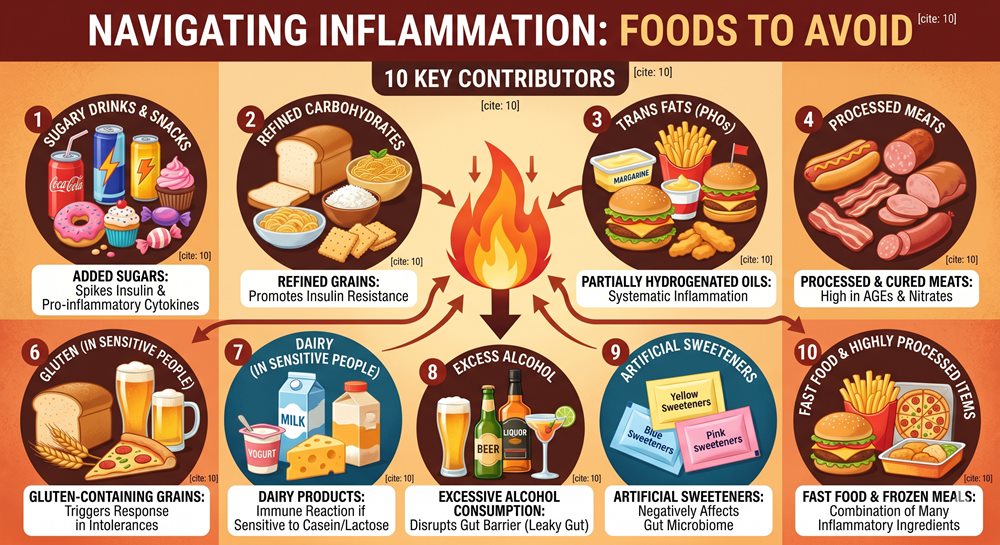
Anti-Inflammatory Foods to Avoid and What to Eat Instead
Understanding which foods drive inflammation — and having clear alternatives ready — is the practical foundation of an anti-inflammatory lifestyle. This guide goes beyond a simple “avoid this” list to explain why certain foods cause inflammation and give you specific substitutes that are equally satisfying.
1. Refined Sugars and Added Sugars
Why It Causes Inflammation
Excess sugar triggers insulin spikes, promotes the production of inflammatory cytokines, and feeds pathogenic gut bacteria. High-fructose corn syrup is particularly problematic — it’s metabolized in the liver and can promote non-alcoholic fatty liver disease, a condition characterized by systemic inflammation.
Common Sources to Avoid
- Soda and sweetened beverages
- Candy, pastries, and baked goods made with refined flour and sugar
- Breakfast cereals with more than 6g of sugar per serving
- Flavored yogurts (often 20-30g of sugar per serving)
- Condiments: ketchup, BBQ sauce, most commercial salad dressings
- Energy drinks and sweetened coffees
Eat Instead
Whole fruit (fiber slows sugar absorption), raw honey in small amounts, medjool dates for sweetness, plain Greek yogurt with fresh berries, homemade dressings with olive oil and lemon.
2. Refined Carbohydrates
Why It Causes Inflammation
Refined carbohydrates have been stripped of fiber and nutrients. They digest rapidly, causing blood sugar spikes that trigger inflammatory responses. The glycemic impact of white bread is nearly identical to eating pure sugar.
Common Sources to Avoid
- White bread, white pasta, white rice
- Most commercial crackers and chips
- Bagels, muffins, and most commercial breakfast pastries
- Instant oatmeal with added flavor packets
Eat Instead
Brown rice, quinoa, whole oats, whole grain bread (look for whole wheat as the first ingredient), sweet potatoes, legumes, and cauliflower rice.
3. Industrial Seed Oils
Why It Causes Inflammation
Refined seed oils — soybean, corn, sunflower, safflower — are extremely high in omega-6 fatty acids. While omega-6 is essential, the modern diet contains omega-6 to omega-3 ratios of 15:1 to 20:1 (the ideal ratio is 4:1 or lower). This imbalance promotes systemic inflammation.
Common Sources to Avoid
- Soybean oil, corn oil, sunflower oil, safflower oil, cottonseed oil
- Vegetable oil (usually soybean-based)
- Most restaurant fried food (cooked in high-volume refined oils)
- Packaged snacks, crackers, chips (check ingredient lists)
- Most commercial mayonnaise and salad dressings
Eat Instead
Extra virgin olive oil, avocado oil, and coconut oil for high-heat cooking. These oils have better omega-6 to omega-3 ratios and are more stable at cooking temperatures.
4. Trans Fats (Partially Hydrogenated Oils)
Why It Causes Inflammation
Artificial trans fats increase LDL (bad) cholesterol, decrease HDL (good) cholesterol, and are directly linked to increased inflammatory markers including C-reactive protein and interleukin-6. They were banned in the US in 2018, but may still appear in small amounts or in foods imported from countries that haven’t banned them.
Common Sources
- Some margarine and shortening
- Commercially fried foods
- Some packaged baked goods (check for “partially hydrogenated” on labels)
- Some non-dairy coffee creamers
Eat Instead
Real butter in moderation, avocado, olive oil, or nut butters for spreads.
5. Processed Meats
Why It Causes Inflammation
Processed meats contain nitrates/nitrites, advanced glycation end products (AGEs), and high levels of saturated fat. The World Health Organization classifies processed meat as a Group 1 carcinogen. Regular consumption is associated with higher levels of C-reactive protein (a key inflammatory marker).
Common Sources to Limit
- Hot dogs, sausages, bacon (unless from high-quality sources)
- Deli meats: ham, salami, pepperoni, bologna
- Spam and canned meat products
- Jerky with added sugars and preservatives
Eat Instead
Fresh, unprocessed proteins: wild-caught salmon, sardines, chicken thighs, eggs, lentils, and beans. If you enjoy cured meats, seek out nitrate-free versions from quality producers.
6. Alcohol (Excessive)
Why It Causes Inflammation
Excessive alcohol disrupts the gut microbiome, increases intestinal permeability (“leaky gut”), and promotes liver inflammation. It also impairs sleep quality, which independently raises inflammatory markers. Note: moderate red wine consumption (1 glass/day) may have modest anti-inflammatory effects from resveratrol, but this benefit disappears with higher consumption.
Eat/Drink Instead
Sparkling water with lemon and herbs, kombucha, tart cherry juice, herbal teas (especially ginger and turmeric), or the occasional glass of red wine.
7. Artificial Additives and Preservatives
Why It Causes Inflammation
Certain artificial additives — particularly emulsifiers like carrageenan and polysorbate 80 — have been shown to disrupt the gut microbiome and promote intestinal inflammation in research models. Artificial food dyes have been linked to inflammatory responses in sensitive individuals, particularly those with existing gut issues.
Common Sources
- Ultra-processed snacks and packaged foods
- Non-dairy milks with carrageenan (check labels)
- Artificially colored candy and beverages
- Low-fat “diet” products (often replace fat with sugar and additives)
Eat Instead
Whole, minimally processed foods. A useful rule: if you can’t picture what it looked like before it was processed, eat it infrequently.
The Anti-Inflammatory Swap Summary
| Instead of… | Choose… |
|---|---|
| White bread | 100% whole grain bread or sourdough |
| Vegetable oil | Extra virgin olive oil or avocado oil |
| Soda | Sparkling water with lemon or kombucha |
| Bacon/deli meats | Wild salmon, sardines, or eggs |
| Sugary cereal | Oatmeal with berries and walnuts |
| White pasta | Whole grain or chickpea pasta |
| Chips and crackers | Roasted chickpeas or walnuts |
| Flavored yogurt | Plain Greek yogurt + fresh berries |
Ready to Start the Full Plan?
Related Articles

Author: Kyren Abbot
Passionate about demystifying women's health, Kyren Abbot is a health contributor focused on holistic wellness. Through her writing, she aims to simplify complex health topics and empower women to thrive in every stage of life